How to Block Inappropriate Content on a Windows PC or Laptop
The internet offers great opportunities for learning and fun, but it also exposes children to unsafe content. In this guide, we’ll show you how to block inappropriate content and inappropriate websites on a Windows PC or laptop step by step using HT Parental Controls, while keeping access to safe websites your child needs.
Step 1: Download and Install HT Parental Controls (Windows Only)
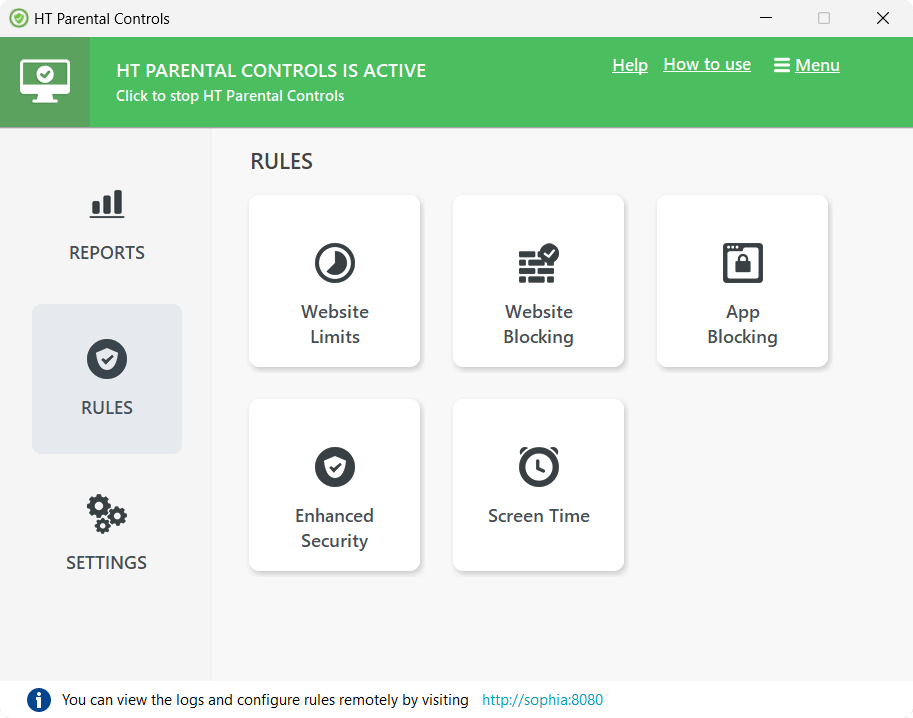
Download HT Parental Controls and complete the setup wizard on your child’s Windows PC or laptop. The installation takes only a few minutes.
Click to enlarge
Step 2: Block Inappropriate Websites
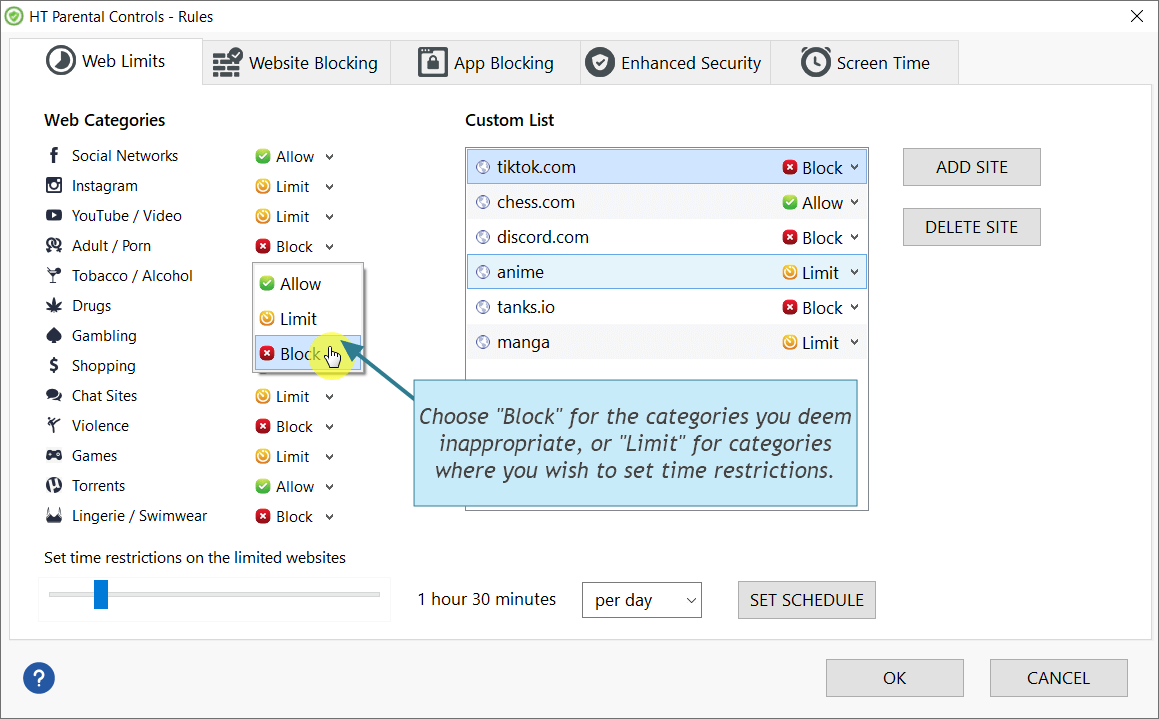
Use the Web Limits section to block inappropriate websites on your child’s Windows PC or laptop.
- Go to Rules → Website Limits.
- Set unsafe categories (for example: adult, gambling, or violence-related websites) to Block.
- In the same screen, use the Custom list to add specific websites or keywords you want to block manually.
- Choose Block (or Limit for time-based access).
- Save the settings and test the website in Chrome, Edge, or Firefox.
Click to enlarge
example.com and www.example.com), add it to the Custom list, save, and test again.
Ready to test website blocking on your child’s PC?
Get Free TrialStep 3: Block Unsafe Apps and Games
Website filtering is the first step, but some apps and games can still expose children to unsafe content or risky interactions on the same Windows computer.
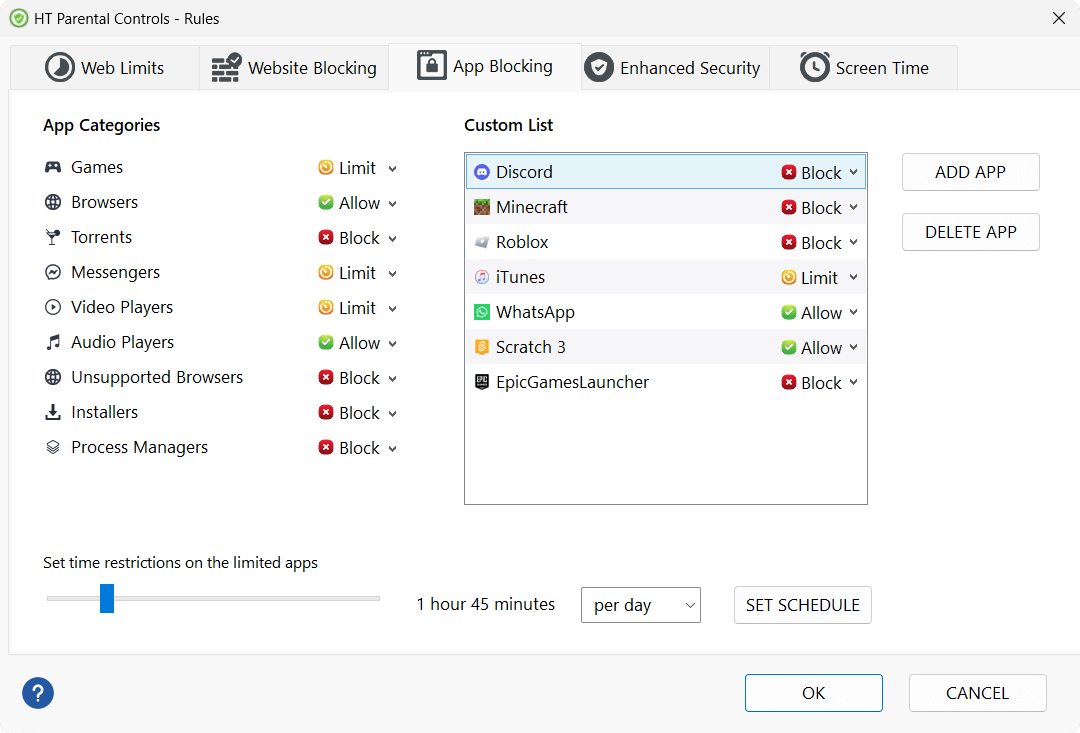
- Go to Rules → Application Blocking.
- Set unsafe apps or games to Block.
- If the app is missing, run it once and refresh the list (or add it manually if available).
- Save changes and test the app on the child’s Windows PC.
Click to enlarge
Step 4: Stay Flexible and Adaptive
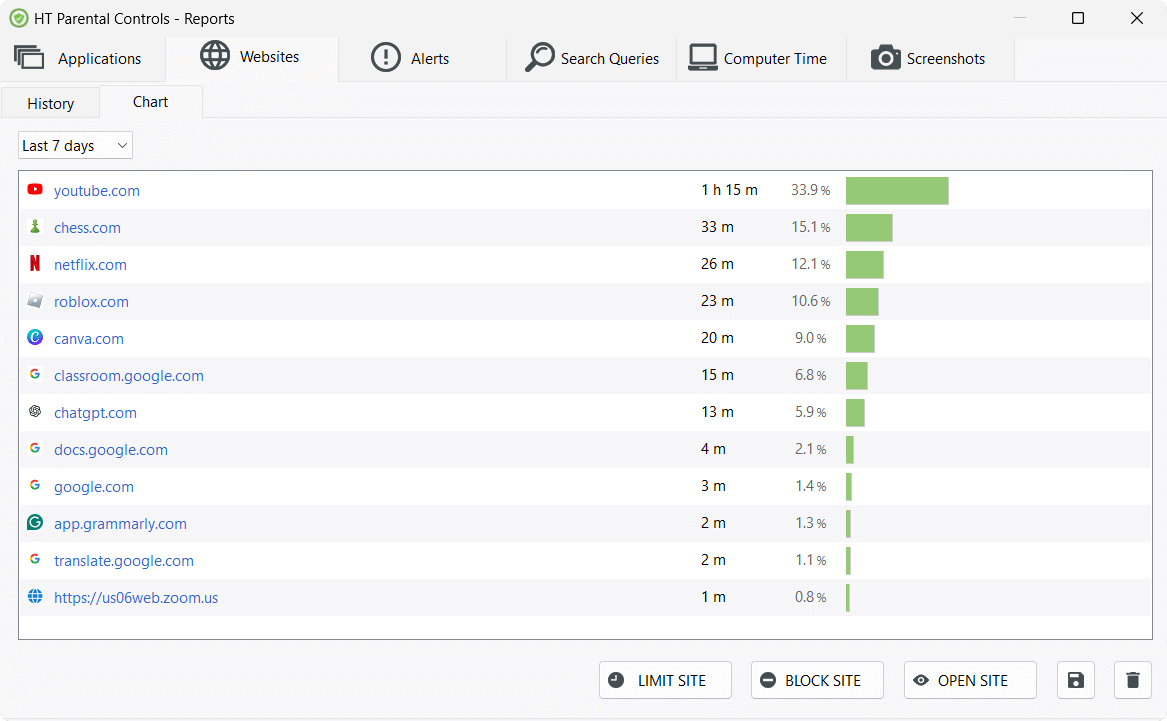
After you block inappropriate websites, review reports regularly as your child’s online habits change on your child’s PC. Update rules when new sites, apps, or schedules become relevant.
- 🔧 Adjust filters: Tighten or relax rules based on what you see in reports.
- ✅ Allow safe interests: Keep educational or creative websites available.
- ⏰ Use schedules: Combine website blocking with time limits for homework and bedtime.
Click to enlarge
If your child starts practicing a musical instrument, consider unblocking or adding extra time for YouTube tutorials. Balancing block lists with constructive online activities fosters trust and growth.
Step 5: Explain Digital Safety to Your Child
Blocking harmful websites is only part of the solution. Honest and open communication with your child is just as important:
- 💬 Share the reasons: Explain that certain content is blocked to prevent exposure to harmful or unsafe material.
- 🧭 Discuss digital etiquette: Teach them how to behave responsibly on social media and chat platforms.
- 🤝 Invite their input: Allow them to voice concerns if they feel a site is unfairly blocked. Show flexibility where appropriate.
What You Get With HT Parental Controls
After setup, you can manage internet safety on a Windows PC or laptop from one place:
Block inappropriate websites by category, exact site, or keyword.
Block unsafe apps and games on the same computer.
Block or limit websites and apps during homework or bedtime.
Check visited websites and adjust rules when needed.
FAQ
These are the most common setup and browser issues parents run into.
Limit option and schedule rules to allow websites at some times and block them during homework, study hours, or bedtime.Conclusion: Protect, Empower, and Grow Together
Learning how to block inappropriate content on a Windows PC or laptop is a vital step toward giving your child the online freedom they need—without the risks. By installing a reliable parental control solution, setting thoughtful rules, and maintaining open dialogue, you create an online environment that nurtures curiosity while keeping potential dangers at bay.
Ready to safeguard your family’s digital journey? Download HT Parental Controls, explore the advanced features, and combine content filtering with screen time limits for stronger day-to-day protection. Together, let’s make the internet a safe and inspiring space for the whole family.
Start your free trial and experience total peace of mind.
Last updated: February 24, 2026